
Where Cowboys Meet the Ocean: The Real Culture of Guanico, Panama
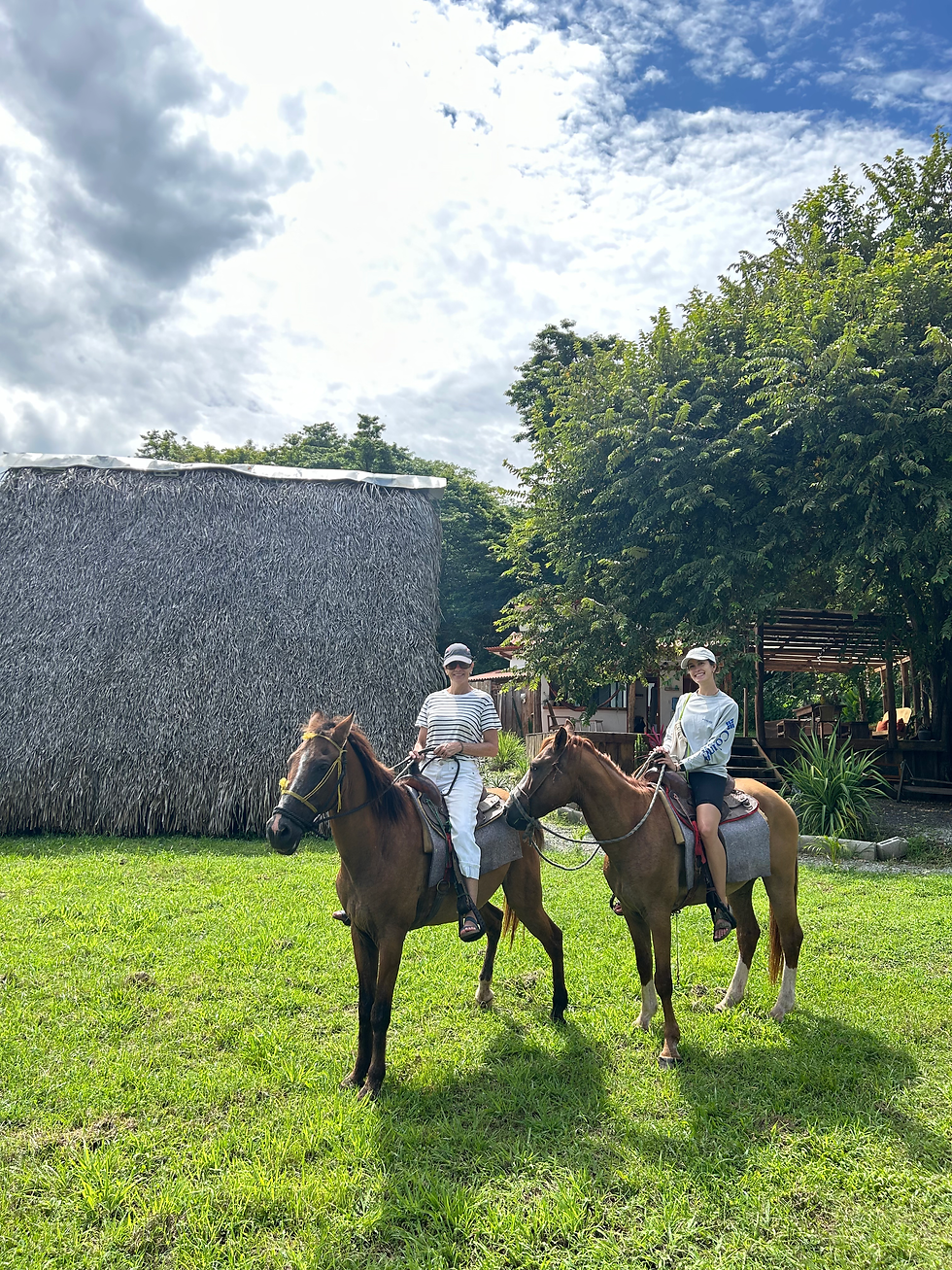
There is a moment that happens almost every day in Guanico. You are driving down the road, salt still in your hair from the morning session, board on the roof, and traffic stops. Not because of a car. Because of a cow. Or a horse, ridden slowly by a man in jeans and boots who has no reason to hurry.
That is not a novelty here. It is just Tuesday.

Guanico, in the province of Los Santos on Panama's Azuero Peninsula, is one of those places that does not know it is special. It has been doing its thing for centuries, farming, fishing, ranching, living close to the land, and then at some point surfers arrived, fell in love with the waves, and stayed. The two worlds did not merge exactly. They just learned to exist side by side, and something unexplainable came out of it.
La Chantin sits two minutes from that beach. From here you look out at open fields, cattle grazing, countryside stretching into hills. Two minutes the other way and you are in the ocean, on one of the most consistent beach breaks in Panama, alone.
That contrast is not accidental. It is the whole point.
The Roots: A Cattle Culture Five Centuries in the Making
The Azuero Peninsula has been Panama's agricultural heart since Spanish colonizers arrived in 1515. The province of Los Santos, where Guanico sits, became one of the country's primary ranching territories during the colonial era. Cattle farming was not just an industry here. It was identity.
The ranchers of Los Santos earned a name over the generations: arrieltas, or leaf-cutters, a reference to their way of clearing land with the same stubbornness their ancestors brought to building it. Farming here means something earned. The land is dry, part of what Panamanians call the Arco Seco, the dry arc, a belt of sun-soaked territory with reliable weather and roots that go deep.
Today, Los Santos is still considered the cradle of Panamanian folklore. The pintao hat, handwoven from local palm, was named Intangible Cultural Heritage by UNESCO. The pollera dress, the tamborito drum music, the saloma, a kind of cowboy yodel that carries across the fields, all trace back here. This is not a region that performs its culture for tourists. It lives it, daily, without thinking about it.

The Ocean Side: Fishing Families and Late-Arriving Waves
Before surfers came, the coast of Guanico belonged to fishing families. It still does. The Pacific here is generous. Clean, warm water, consistent swells that roll in from all directions. The local fishermen learned the ocean the way the ranchers learned the land: by being in it, every day, for generations.
Surfing came later. It arrived with foreign travelers, mostly Americans and Europeans who followed the swell south from Costa Rica and found this stretch of coast largely untouched. Playa Guanico sits inside what surfers now call the Golden Triangle of Los Santos, alongside Playa Venao and Cambutal. The beach break works nearly year-round, picks up swell from every direction, and offers waves for every level. Some mornings you count more birds than people in the water.
Over the past fifteen years or so, some local young men started paddling out. Cautiously at first, then with the confidence of people who grew up watching that ocean from shore. Today there are a handful of local surfers in Guanico who surf as naturally as their fathers fish. The culture crossed, slowly, without ceremony.
A Day in Guanico: What This Collision Actually Looks Like
You wake up at La Chantin. The air is still cool. Roosters, somewhere. Fields outside the window, green and quiet.
You walk two minutes to the beach. There might be one other surfer out, maybe none. You catch waves until your arms give up. Long lefts, some rights, water so warm you forget you are in the ocean.
On the way back, you stop for a cow in the road. The farmer riding behind it nods. You nod back.
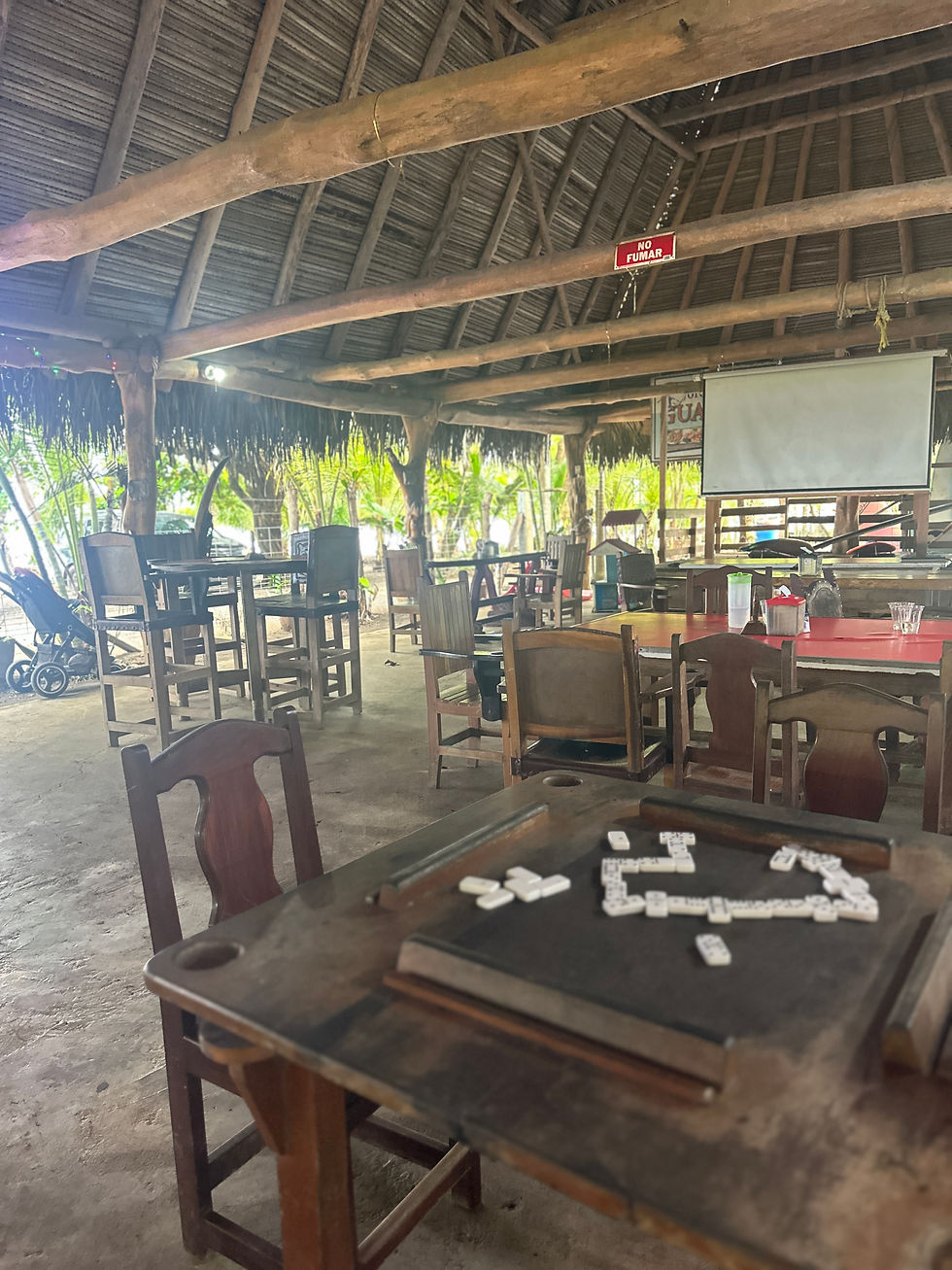
In the evening, everyone ends up at El Jorón, the big rancho in Guanico. This is where it gets interesting. Surfers still in bikinis, salt-dried, beers in hand, share tables with men in jeans and riding boots who just finished work. Horses tied outside. Tipico playing. Nobody finds this strange. It has been this way long enough that it is just how it is.
There is no Instagram version of El Jorón that does it justice. You have to sit there and feel the specific absurdity and perfection of it.
Why This Place Is Hard to Explain to People Who Have Not Been
Most travel destinations are one thing. A beach. A city. A mountain. Guanico is two completely different worlds that happen to share a postal code, and somehow both are better for it.
The surf is serious by any measure, consistent, uncrowded, exposed to all swell directions, warm water, no crowds pushing you off the peak. But it exists inside a landscape that has nothing to do with surf culture. The fields, the horses, the rice harvest, the cattle moving slowly down the road, these are not backdrop. They are the place.
La Chantin is two minutes from that beach and surrounded by farmland. You can hear the ocean if you listen. You can also hear nothing at all.
For travelers who want to move slowly, stay longer, and understand a place rather than just pass through it, this is the right address. This is Panama before it became a destination. This is what the country has always been, quietly, for people willing to find it.
Stay at La Chantin
La Chantin is a small guesthouse in Guanico, Los Santos. Two minutes from the surf, surrounded by countryside, run by someone who came for the waves and never left.
If you are planning a trip, a week, two weeks, a month, and you want uncrowded surf, real Panama, and a place that does not feel like anyone packaged it for you, this is where to stay.


Comments